

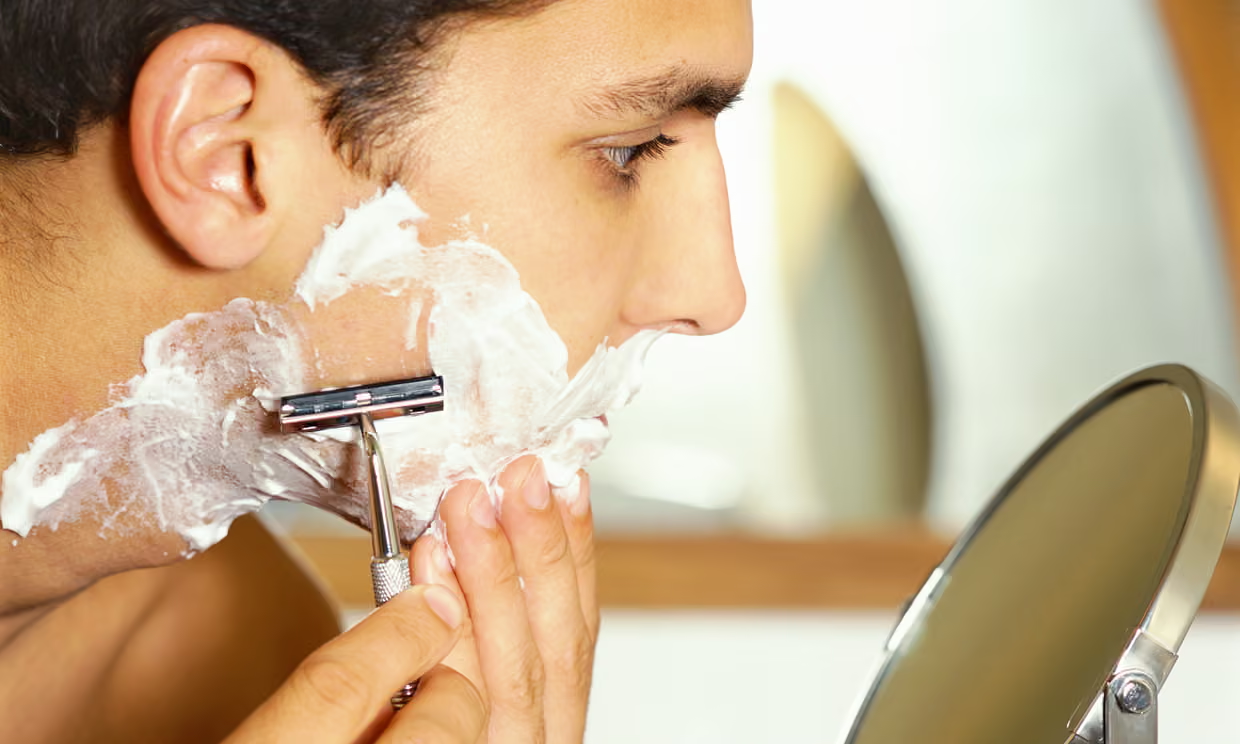
Shaving had become a strange kind of tax for American men: overpriced cartridges, locked cases at drugstores, and brands that spoke as if every morning shave were a military mission. Dollar Shave Club did not win because razors were new. It won because the buying experience was broken, and it made that broken system feel silly. For anyone studying modern brand growth, the lesson is sharp: the product can be ordinary while the customer relationship is worth a fortune. Unilever paid a reported billion not for a blade alone, but for a direct line into bathrooms, habits, repeat purchases, humor, and first-party customer data. DSC turned a cheap, forgettable errand into a subscription razor service with attitude. That sounds simple until you remember how protected the shaving aisle once felt. Big brands owned shelves, retailers owned access, and men had been trained to accept high prices as the cost of a clean face. The startup broke that deal by making the customer feel seen before asking for the sale.
Why the Dollar Shave Club Business Model Felt Bigger Than Razors
The company started with a plain insight: people did not hate shaving as much as they hated buying blades. That difference matters. A weaker founder might have tried to build a better handle, add another strip of gel, or argue over blade count. DSC attacked the trip to the store, the sticker shock, and the feeling that men were being talked down to by glossy ads. It also picked a product with built-in repeat use. You can build a clever brand around a mattress, but the customer may not return for years. A razor customer comes back because his face keeps making the request. That made the model less flashy than a social app, but more dependable than a trend-driven product. The company could plan around a routine, and routines are where consumer brands become hard to dislodge.
The blade was not the real product
The early offer looked almost too simple. You signed up, paid a small monthly fee, and blades showed up at your door. A subscription razor service removed the two worst parts of the category: remembering to buy replacements and paying too much when you finally did. It also gave the company a reason to stay in touch without begging for attention every week.
The product did not need to feel rare. It needed to arrive before the customer ran out. That is a small promise, but in consumer goods, small promises that happen every month can build more trust than one huge campaign. A man in Dallas who gets fresh blades before Monday morning does not praise the logistics out loud. He keeps paying because nothing went wrong.
A counterintuitive part of the model is that low price was only the doorway. The deeper value sat in the routine. Once a man trusted the club to handle blades, adding shave butter, wipes, body wash, or deodorant felt like the next shelf in the same bathroom cabinet. The company was not asking for a new behavior each time. It was extending an old one.
Convenience became the habit engine
Retail shaving sold in bursts. You bought cartridges, disappeared for weeks, then returned when the pack was empty. DSC wanted a different rhythm. It wanted the customer relationship to stay alive between purchases. That shift moved the business from a product sale to an account system.
That is where the direct-to-consumer brand logic mattered. When you own the account, the email list, the billing cycle, and the product feedback loop, you are not waiting for a retailer to tell you what happened. You can see when people join, pause, upgrade, complain, or leave. That information has weight because it comes from behavior, not a focus group in a conference room.
Think about a customer in Phoenix who shaves three times a week and hates wandering around a crowded drugstore after work. He is not buying a grand lifestyle. He is buying one less errand. That quiet relief is harder for legacy brands to copy than a lower sticker price. A coupon can copy price for a weekend. It cannot copy the feeling of having the chore handled.
How Humor Turned a Commodity Into a Relationship
The launch video gets mentioned so often that people sometimes miss why it worked. It was not funny for decoration. It gave the brand permission to say what shoppers already thought: razor marketing had become absurd. That tone made the company feel less like a seller and more like the friend who finally said the awkward thing out loud. Humor also gave the brand a shield. If a tiny startup had walked into the shaving market with a stiff corporate tone, it would have looked outmatched before the first order shipped. The joke changed the frame. Instead of asking customers to compare blade engineering against larger companies, it asked them to compare common sense against a tired buying ritual. That was a cleaner fight for a new entrant.
The famous video lowered customer suspicion
Most startups ask for trust before they have earned it. DSC did something smarter. It used comedy to make the risk feel small. The founder walked through a warehouse, made the product easy to understand, and turned a boring blade pitch into a story people wanted to share. The offer did not hide behind technical claims. It sounded like a person talking to another person.
That mattered because shaving was not a natural social topic. Nobody at a backyard cookout in Ohio wants a lecture on cartridge design. But a sharp joke about overpriced razors? That travels. The video worked because it gave viewers a clean line to repeat, not a list of product specs to memorize.
Humor also helped the brand avoid the trap of sounding cheap. Cheap can feel weak. Funny and cheap can feel like you are in on the secret. That is a stronger emotional position for a direct-to-consumer brand than another polished promise about performance. It made the first purchase feel less like downgrading and more like opting out of a dumb system.
The brand made the buyer feel smarter
The hidden sale was not, “Our blades cost less.” The hidden sale was, “You have been overpaying, and we both know it.” That framed the customer as alert, not broke. It gave the purchase a little pride. That matters in men’s grooming, where brands often sell status, control, and competence under the surface.
This is why the company became a favorite in consumer brand growth playbooks. It did not invent recurring revenue. It made recurring revenue feel like a small rebellion against the aisle. A buyer could cancel at home, avoid the locked glass case, and still feel that he made the smarter call.
A non-obvious lesson sits here for founders. The best brand voice is not the loudest voice. It is the one that names the customer’s irritation with more nerve than the customer expected. DSC did that, then backed it up with a simple checkout flow and a clear offer. Voice got the click, but the plain offer made the click feel safe.
Why Unilever Saw More Than a Razor Startup
By the time the deal happened, the billion-dollar question was not whether the company sold blades. Everyone knew it did. The sharper question was whether a global consumer goods giant could buy a customer relationship it had struggled to build from scratch in the United States. That was the real prize. Unilever already knew shelves, supply chains, and household names. What it wanted was proof that a grooming brand could live closer to the customer than the supermarket shelf allowed. For a legacy buyer, that closeness had several uses. It could inspire new launches, pressure older teams to move faster, and show how much personality a men’s care brand could carry without losing trust. The purchase was part brand deal, part operating lesson.
The Unilever acquisition was about access
A large packaged-goods company knows how to manufacture, distribute, and manage shelf space. What it does not always own is a daily conversation with the end customer. The Unilever acquisition gave the buyer a working model for reaching Americans outside the old store-first system. That matters because retail data can tell you what sold, but it rarely tells you why a customer almost left.
Unilever’s own 2016 full-year announcement described the acquired company as a subscription-based direct-to-consumer male grooming business. That wording says a lot. The subscription and the direct channel were not side notes. They were the reason the deal made strategic sense. In a market where ad costs and shelf fees can swallow attention, a known customer file is a rare asset.
Picture the difference. A deodorant brand in a supermarket may know total sales by region. A club-based grooming company can know which customer opened an email, skipped a shipment, tried a higher-margin product, or came back after a discount. That data is not magic, but it makes marketing less blind. It also lets a company test a new product with a smaller group before spending millions on a national rollout.
The billion-dollar price reflected future options
The reported price shocked people because razors looked like a low-glamour category. Yet big buyers often pay for options, not only current profit. DSC offered options in men’s grooming, subscription commerce, first-party data, content-led advertising, and online product testing. A billion can look high when you price the blades. It looks different when you price the customer path.
The Unilever acquisition also carried a defensive angle. If a startup can use humor, email, and subscriptions to pull men away from old brands, the same playbook can hit soap, deodorant, hair care, oral care, and household goods. Buying the company meant buying a warning signal before it spread too far. In boardrooms, threats with working customer accounts get attention faster than threats with pitch decks.
Here is the part many casual takes miss: paying a billion did not mean the model was perfect. It meant the buyer believed the model taught something expensive. A lesson learned late inside a giant company can cost more than a lesson bought early from the outside. The price was partly tuition for a new kind of consumer relationship.
What Founders Can Learn From the Billion-Dollar Exit
The story is tempting because it looks simple from far away. Make a funny video. Sell cheap razors. Get acquired. That version is neat, and it is wrong. The stronger lesson is that the company found a category where customer annoyance was high, switching risk was low, and the purchase repeated often enough to support a lasting account. It also understood that the first purchase is not the finish line. In a subscription category, the first purchase is a test. That is good news for small teams because they do not need to beat an incumbent everywhere. They need to win one narrow moment, keep the promise, and then earn the next order. The hard part is staying disciplined after the first wave of attention arrives. Attention can make a young company sloppy. It can tempt teams to add products too fast, chase every audience, or mistake viral reach for loyalty. The stronger path is slower on the surface: tighten operations, learn from cancellations, and make the second order feel as easy as the first.
Pick a boring category with hidden anger
Boring markets can be beautiful. People already spend money there, which means you do not have to create demand from scratch. The job is to find the part of the old buying process that customers tolerate because nobody has offered them a cleaner choice. The best opening is often a sigh, not a scream.
Razors had the right mix. The product was familiar, the price felt inflated, the purchase repeated, and the customer could test a new brand without changing his identity. No one had to become a different person to join the club. A man could try it for a month, keep his routine, and judge the offer by whether the blade worked and arrived on time.
A founder looking at pet supplies, vitamins, printer ink, work socks, or home filters should study that pattern before copying the jokes. The jokes were the spark. The market structure was the wood. When both are present, a small company can look larger than it is because the customer’s frustration has been waiting for a door.
Build the account before chasing the exit
A buyer may admire revenue, but it pays more attention when revenue comes with a customer file, repeat behavior, and room to sell related products. That is why the startup’s club idea mattered more than a one-time e-commerce store. A store sells what is in the cart. A club can learn what belongs in the cart next month.
For deeper reading on how exits are shaped, see startup acquisition lessons. The lesson here is plain: if you want a strategic buyer to care, show that your customer base can teach them something they cannot learn from retail reports alone. That means tracking retention, repeat orders, product attachment, complaints, and reasons people cancel. A founder who can explain why customers stay has a stronger story than one who can only brag about sign-ups. Sign-ups show interest. Retention shows trust.
The later sale of most of the brand to Nexus also adds balance to the myth. A billion-dollar exit does not freeze a company in victory. Integration, growth pressure, channel shifts, and category limits still show up. The first win is earning the customer. The second is keeping the model strong after the headline fades. Founders should respect both parts, because markets are full of loud launches that never became durable businesses.
Conclusion
The cleanest business stories often hide the hardest work. This one was not about making a sharper blade or shouting louder than legacy brands. It was about noticing that millions of American men were tired of a dull shopping routine and giving them a better bargain, a better tone, and a better way to repeat the purchase. The real lesson from Dollar Shave Club is that customer control can be worth more than product novelty. When a company owns the relationship, it can learn faster, sell wider, and make an ordinary category feel personal. That is why the billion-dollar price made sense, even if the later ownership story became more complicated. For founders, the takeaway is not to copy the video or chase shock value. Find the quiet irritation in a large market, solve it with nerve, and build a direct bond that a bigger company would rather buy than fight. That is the part worth copying. The smartest founders will not see the story as nostalgia. They will treat it as a reminder that boring markets can still hide expensive pain.
Frequently Asked Questions
How did the shaving startup make money from subscriptions?
It made money by turning repeat blade purchases into recurring billing. Customers paid for scheduled shipments, which helped the company forecast demand and build an account relationship. The model also opened the door to related grooming items with stronger margins.
Why did Unilever pay so much for a razor company?
The buyer was paying for customer access, brand energy, first-party data, and a working online sales model. Blades were the starting point. The larger value was the chance to learn how American men bought grooming products outside the old retail aisle.
Was the subscription razor service profitable from the start?
Early subscription brands often spend heavily to acquire customers, so fast growth does not always mean early profit. The stronger question is whether each customer stays long enough and buys enough products to cover that acquisition cost over time.
What made the launch video so effective?
It explained the offer fast, mocked the old category, and gave viewers a reason to share it. The comedy did not distract from the sale. It made the sale feel honest, low-risk, and easy to understand.
Is the direct-to-consumer brand model still useful now?
Yes, but it is harder than it was during the first DTC wave. Ad costs are higher, customers have more choices, and retail still matters. The model works best when the brand earns repeat orders and controls a clear customer relationship.
What can small startups learn from this case?
Start with a customer frustration that already exists. A clever ad cannot save a weak offer for long. The company matched humor with price, convenience, and repeat purchase behavior, which made the brand easier to try and easier to keep.
Why did the company expand beyond razors?
Razors created the habit, but grooming products expanded the basket. Once customers trusted the club for blades, selling shave cream, wipes, and deodorant made sense. That move helped the company become more than a narrow blade seller.
Did the billion-dollar deal prove the model was perfect?
No. It proved the model was valuable enough to attract a major buyer. Later ownership changes showed that growth, profit, and integration still matter after an exit. A strong acquisition story can still face hard operating limits.